I found this article that I need. I have been finding it hard to get up in the morning. I case I am not the only one I thought that other people would like to read this too.
t is well to be up before daybreak, for such habits contribute to health, wealth, and wisdom.
- Aristotle
Are morning people born or made? In my case it was definitely made. In my early 20s, I rarely went to bed before midnight, and I’d almost always sleep in late. I usually didn’t start hitting my stride each day until late afternoon.
But after a while I couldn’t ignore the high correlation between success and rising early, even in my own life. On those rare occasions where I did get up early, I noticed that my productivity was almost always higher, not just in the morning but all throughout the day. And I also noticed a significant feeling of well-being. So being the proactive goal-achiever I was, I set out to become a habitual early riser. I promptly set my alarm clock for 5AM…
… and the next morning, I got up just before noon.
Hmmm…
I tried again many more times, each time not getting very far with it. I figured I must have been born without the early riser gene. Whenever my alarm went off, my first thought was always to stop that blasted noise and go back to sleep. I tabled this habit for a number of years, but eventually I came across some sleep research that showed me that I was going about this problem the wrong way. Once I applied those ideas, I was able to become an early riser consistently.
It’s hard to become an early riser using the wrong strategy. But with the right strategy, it’s relatively easy.
The most common wrong strategy is this: You assume that if you’re going to get up earlier, you’d better go to bed earlier. So you figure out how much sleep you’re getting now, and then just shift everything back a few hours. If you now sleep from midnight to 8am, you figure you’ll go to bed at 10pm and get up at 6am instead. Sounds very reasonable, but it will usually fail.
It seems there are two main schools of thought about sleep patterns. One is that you should go to bed and get up at the same times every day. It’s like having an alarm clock on both ends — you try to sleep the same hours each night. This seems practical for living in modern society. We need predictability in our schedules. And we need to ensure adequate rest.
The second school says you should listen to your body’s needs and go to bed when you’re tired and get up when you naturally wake up. This approach is rooted in biology. Our bodies should know how much rest we need, so we should listen to them.
Through trial and error, I found out for myself that both of these schools are suboptimal sleep patterns. Both of them are wrong if you care about productivity. Here’s why:
If you sleep set hours, you’ll sometimes go to bed when you aren’t sleepy enough. If it’s taking you more than five minutes to fall asleep each night, you aren’t sleepy enough. You’re wasting time lying in bed awake and not being asleep. Another problem is that you’re assuming you need the same number of hours of sleep every night, which is a false assumption. Your sleep needs vary from day to day.
If you sleep based on what your body tells you, you’ll probably be sleeping more than you need — in many cases a lot more, like 10-15 hours more per week (the equivalent of a full waking day). A lot of people who sleep this way get 8+ hours of sleep per night, which is usually too much. Also, your mornings may be less predictable if you’re getting up at different times. And because our natural rhythms are sometimes out of tune with the 24-hour clock, you may find that your sleep times begin to drift.
The optimal solution for me has been to combine both approaches. It’s very simple, and many early risers do this without even thinking about it, but it was a mental breakthrough for me nonetheless. The solution was to go to bed when I’m sleepy (and only when I’m sleepy) and get up with an alarm clock at a fixed time (7 days per week). So I always get up at the same time (in my case 5am), but I go to bed at different times every night.
I go to bed when I’m too sleepy to stay up. My sleepiness test is that if I couldn’t read a book for more than a page or two without drifting off, I’m ready for bed. Most of the time when I go to bed, I’m asleep within three minutes. I lie down, get comfortable, and immediately I’m drifting off. Sometimes I go to bed at 9:30pm; other times I stay up until midnight. Most of the time I go to bed between 10-11pm. If I’m not sleepy, I stay up until I can’t keep my eyes open any longer. Reading is an excellent activity to do during this time, since it becomes obvious when I’m too sleepy to read.
When my alarm goes off every morning, I turn it off, stretch for a couple seconds, and sit up. I don’t think about it. I’ve learned that the longer it takes me to get up, the more likely I am to try to sleep in. So I don’t allow myself to have conversations in my head about the benefits of sleeping in once the alarm goes off. Even if I want to sleep in, I always get up right away.
After a few days of using this approach, I found that my sleep patterns settled into a natural rhythm. If I got too little sleep one night, I’d automatically be sleepier earlier and get more sleep the next night. And if I had lots of energy and wasn’t tired, I’d sleep less. My body learned when to knock me out because it knew I would always get up at the same time and that my wake-up time wasn’t negotiable.
A side effect was that on average, I slept about 90 minutes less per night, but I actually felt more well-rested. I was sleeping almost the entire time I was in bed.
I read that most insomniacs are people who go to bed when they aren’t sleepy. If you aren’t sleepy and find yourself unable to fall asleep quickly, get up and stay awake for a while. Resist sleep until your body begins to release the hormones that rob you of consciousness. If you simply go to bed when you’re sleepy and then get up at a fixed time, you’ll cure your insomnia. The first night you’ll stay up late, but you’ll fall asleep right away. You may be tired that first day from getting up too early and getting only a few hours of sleep the whole night, but you’ll slog through the day and will want to go to bed earlier that second night. After a few days, you’ll settle into a pattern of going to bed at roughly the same time and falling asleep right away.
So if you want to become an early riser (or just exert more control over your sleep patterns), then try this: Go to bed only when you’re too sleepy to stay up, and get up at a fixed time every morning.
Edit (5/31/05): Due to the incredible popularity of this post, I’ve written a follow-up with some extra detail and clarifications: How to Become an Early Riser – Part II. And if you really want to take sleep to the next level, read about my experiences with Polyphasic Sleep, where you only sleep 2-3 hours a day by taking 20-minute naps every few hours, around the clock.
Edit (5/29/06): Be sure to read the related article How to Get Up Right Away When Your Alarm Goes Off.
Friday, December 23, 2011

Tuesday, December 20, 2011
Fast Fat burnners
I found this short tidbit by Kate Ashford. Remember making little changes can add up.
In the gym
By Kate AshfordCatch the running bug
You’ll continue to burn fat after your jog: People who run for at least four hours a week melt more calories than non-runners, even when they’re not running, a Yale University School of Medicine study reports.
Crank it up early
Working out harder during the first half of your workout and taking it easier during the second burns up to 23% more fat than doing the opposite, according to a study from The College of New Jersey.
Saturday, December 17, 2011
Home mad protein bars
I found this tasty protein bar Recipe for people to try out. I am trying to eat better my self and finding things that are healthy and taste good is a challenge. But I keep looking and trying new things.
These bars provide healthy fats from natural peanut butter and flaxseed. Plus, thanks to whole grain oats, they give you 4 grams of fiber. Cooking with whey protein can be tricky – it tends to dry out baked goods – so I keep the cooking time brief and wrap them up soon after baking them. The resulting protein bar recipe below is my personal favorite of all the protein bars I’ve concocted, and on the Precision Nutrition forums it has received many glowing reviews. I hope you try it and like it too!
Per serving: 195 calories, 11 g total fat, 2 g saturated fat, 5 mg cholesterol, 14 g total carbohydrate, 4 g dietary fiber, 12 g protein, 218 mg sodium.
These bars provide healthy fats from natural peanut butter and flaxseed. Plus, thanks to whole grain oats, they give you 4 grams of fiber. Cooking with whey protein can be tricky – it tends to dry out baked goods – so I keep the cooking time brief and wrap them up soon after baking them. The resulting protein bar recipe below is my personal favorite of all the protein bars I’ve concocted, and on the Precision Nutrition forums it has received many glowing reviews. I hope you try it and like it too!
Chocolate Peanut Butter Swirl Protein Bars
- Cooking oil spray
- ½ cup plain oatmeal (quick oats, not instant)
- ½ cup unsweetened soymilk
- ¼ cup egg whites (2 whites)
- ½ tablespoon vanilla extract
- 1 scoop chocolate whey protein powder (1/3 cup)
- ½ cup Splenda granulated or sugar (or 12 packets Truvia)
- ¼ cup milled flaxseed
- 2 tablespoons white whole wheat flour or whole wheat pastry flour
- 1 tablespoon unsweetened cocoa powder
- ¾ teaspoon baking powder
- 1/8 teaspoon salt
- 6 tablespoons natural peanut butter
Preheat oven to 350°F. Spray an 8×8″ pan with cooking oil spray.
- In a microwave safe bowl, combine oats and milk; cook for 60 seconds. Stir and allow to cool; mix in egg whites and vanilla.
- In a large mixing bowl, combine the whey protein, Splenda, flaxseed, flour, cocoa, baking powder, and salt.
- Add oatmeal mixture to dry ingredients; mix just until everything is moist. Spread batter in pan.
- Place peanut butter in microwave safe bowl and heat for 45 seconds or until melted. Spoon peanut butter over batter in pan and swirl with knife tip.
- Bake for 10 minutes; allow to cool completely before cutting into 6 bars. Wrap each individually in plastic wrap and store in the freezer or refrigerator. Unwrap and microwave 30 seconds to warm.
Per serving: 195 calories, 11 g total fat, 2 g saturated fat, 5 mg cholesterol, 14 g total carbohydrate, 4 g dietary fiber, 12 g protein, 218 mg sodium.
Wednesday, December 14, 2011
Facts about the human body
I found this today. It has some interesting stuff about our bodies. It is amazing how we live in our bodies all our lives and don't know that much about it. So I hope you read and learn something new about your self.
100 Very Cool Facts About The Human Body
100 Very Cool Facts About The Human Body
The human body is an incredibly complex and intricate system, one that still baffles doctors and researchers on a regular basis despite thousands of years of medical knowledge. As a result, it shouldn’t be any surprise that even body parts and functions we deal with every day have bizarre or unexpected facts and explanations behind them. From sneezes to fingernail growth, here are 100 weird, wacky, and interesting facts about the human body.
The Brain
The human brain is the most complex and least understood part of the human anatomy. There may be a lot we don’t know, but here are a few interesting facts that we’ve got covered.
Hair and Nails
While they’re not a living part of your body, most people spend a good amount of time caring for their hair and nails. The next time you’re heading in for a haircut or manicure, think of these facts.
Internal Organs
Though we may not give them much thought unless they’re bothering us, our internal organs are what allow us to go on eating, breathing and walking around. Here are some things to consider the next time you hear your stomach growl.
Bodily Functions
We may not always like to talk about them, but everyone has to deal with bodily functions on a daily basis. These are a few facts about the involuntary and sometimes unpleasant actions of our bodies.
Sex and Reproduction
As taboo as it may be in some places, sex is an important part of human life as a facet of relationships and the means to reproduce. Here are a few things you might not have known.
Senses
The primary means by which we interact with the world around us is through our senses. Here are some interesting facts about these five sensory abilities.
Aging and Death
From the very young to the very old, aging is a necessary and unavoidable part of life. Learn about the process with these interesting, if somewhat strange facts.
Disease and Injury
Most of us will get injured or sick at some point in our lives. Here are some facts on how the human body reacts to the stresses and dangers from the outside world.
Muscles and Bones
Muscles and Bones provide the framework for our bodies and allow us to jump, run or just lie on the couch. Here are a few facts to ponder the next time you’re lying around.
Microscopic Level
Much of what takes place in our bodies happens at a level that we simply can’t see with the naked eye. These facts will show you that sometimes that might be for the best.
Miscellaneous
Here are a few things you might not have known about all different parts of your anatomy.
The human brain is the most complex and least understood part of the human anatomy. There may be a lot we don’t know, but here are a few interesting facts that we’ve got covered.
- Nerve impulses to and from the brain travel as fast as 170 miles per hour. Ever wonder how you can react so fast to things around you or why that stubbed toe hurts right away? It’s due to the super-speedy movement of nerve impulses from your brain to the rest of your body and vice versa, bringing reactions at the speed of a high powered luxury sports car.
- The brain operates on the same amount of power as 10-watt light bulb. The cartoon image of a light bulb over your head when a great thought occurs isn’t too far off the mark. Your brain generates as much energy as a small light bulb even when you’re sleeping.
- The human brain cell can hold 5 times as much information as the Encyclopedia Britannica. Or any other encyclopedia for that matter. Scientists have yet to settle on a definitive amount, but the storage capacity of the brain in electronic terms is thought to be between 3 or even 1,000 terabytes. The National Archives of Britain, containing over 900 years of history, only takes up 70 terabytes, making your brain’s memory power pretty darn impressive.
- Your brain uses 20% of the oxygen that enters your bloodstream. The brain only makes up about 2% of our body mass, yet consumes more oxygen than any other organ in the body, making it extremely susceptible to damage related to oxygen deprivation. So breathe deep to keep your brain happy and swimming in oxygenated cells.
- The brain is much more active at night than during the day. Logically, you would think that all the moving around, complicated calculations and tasks and general interaction we do on a daily basis during our working hours would take a lot more brain power than, say, lying in bed. Turns out, the opposite is true. When you turn off your brain turns on. Scientists don’t yet know why this is but you can thank the hard work of your brain while you sleep for all those pleasant dreams.
- Scientists say the higher your I.Q. the more you dream. While this may be true, don’t take it as a sign you’re mentally lacking if you can’t recall your dreams. Most of us don’t remember many of our dreams and the average length of most dreams is only 2-3 seconds–barely long enough to register.
- Neurons continue to grow throughout human life. For years scientists and doctors thought that brain and neural tissue couldn’t grow or regenerate. While it doesn’t act in the same manner as tissues in many other parts of the body, neurons can and do grow throughout your life, adding a whole new dimension to the study of the brain and the illnesses that affect it.
- Information travels at different speeds within different types of neurons. Not all neurons are the same. There are a few different types within the body and transmission along these different kinds can be as slow as 0.5 meters/sec or as fast as 120 meters/sec.
- The brain itself cannot feel pain. While the brain might be the pain center when you cut your finger or burn yourself, the brain itself does not have pain receptors and cannot feel pain. That doesn’t mean your head can’t hurt. The brain is surrounded by loads of tissues, nerves and blood vessels that are plenty receptive to pain and can give you a pounding headache.
- 80% of the brain is water. Your brain isn’t the firm, gray mass you’ve seen on TV. Living brain tissue is a squishy, pink and jelly-like organ thanks to the loads of blood and high water content of the tissue. So the next time you’re feeling dehydrated get a drink to keep your brain hydrated.
Hair and Nails
While they’re not a living part of your body, most people spend a good amount of time caring for their hair and nails. The next time you’re heading in for a haircut or manicure, think of these facts.
- Facial hair grows faster than any other hair on the body. If you’ve ever had a covering of stubble on your face as you’re clocking out at 5 o’clock you’re probably pretty familiar with this. In fact, if the average man never shaved his beard it would grow to over 30 feet during his lifetime, longer than a killer whale.
- Every day the average person loses 60-100 strands of hair. Unless you’re already bald, chances are good that you’re shedding pretty heavily on a daily basis. Your hair loss will vary in accordance with the season, pregnancy, illness, diet and age.
- Women’s hair is about half the diameter of men’s hair. While it might sound strange, it shouldn’t come as too much of a surprise that men’s hair should be coarser than that of women. Hair diameter also varies on average between races, making hair plugs on some men look especially obvious.
- One human hair can support 3.5 ounces. That’s about the weight of two full size candy bars, and with hundreds of thousands of hairs on the human head, makes the tale of Rapunzel much more plausible.
- The fastest growing nail is on the middle finger. And the nail on the middle finger of your dominant hand will grow the fastest of all. Why is not entirely known, but nail growth is related to the length of the finger, with the longest fingers growing nails the fastest and shortest the slowest.
- There are as many hairs per square inch on your body as a chimpanzee. Humans are not quite the naked apes that we’re made out to be. We have lots of hair, but on most of us it’s not obvious as a majority of the hairs are too fine or light to be seen.
- Blondes have more hair. They’re said to have more fun, and they definitely have more hair. Hair color determines how dense the hair on your head is. The average human has 100,000 hair follicles, each of which is capable of producing 20 individual hairs during a person’s lifetime. Blondes average 146,000 follicles while people with black hair tend to have about 110,000 follicles. Those with brown hair fit the average with 100,000 follicles and redheads have the least dense hair, with about 86,000 follicles.
- Fingernails grow nearly 4 times faster than toenails. If you notice that you’re trimming your fingernails much more frequently than your toenails you’re not just imagining it. The nails that get the most exposure and are used most frequently grow the fastest. On average, nails on both the toes and fingers grow about one-tenth of an inch each month.
- The lifespan of a human hair is 3 to 7 years on average. While you quite a few hairs each day, your hairs actually have a pretty long life providing they aren’t subject to any trauma. Your hairs will likely get to see several different haircuts, styles, and even possibly decades before they fall out on their own.
- You must lose over 50% of your scalp hairs before it is apparent to anyone. You lose hundreds of hairs a day but you’ll have to lose a lot more before you or anyone else will notice. Half of the hairs on your pretty little head will have to disappear before your impending baldness will become obvious to all those around you.
- Human hair is virtually indestructible. Aside from it’s flammability, human hair decays at such a slow rate that it is practically non-disintegrative. If you’ve ever wondered how your how clogs up your pipes so quick consider this: hair cannot be destroyed by cold, change of climate, water, or other natural forces and it is resistant to many kinds of acids and corrosive chemicals.
Internal Organs
Though we may not give them much thought unless they’re bothering us, our internal organs are what allow us to go on eating, breathing and walking around. Here are some things to consider the next time you hear your stomach growl.
- The largest internal organ is the small intestine. Despite being called the smaller of the two intestines, your small intestine is actually four times as long as the average adult is tall. If it weren’t looped back and forth upon itself it wouldn’t fit inside the abdominal cavity.
- The human heart creates enough pressure to squirt blood 30 feet. No wonder you can feel your heartbeat so easily. Pumping blood through your body quickly and efficiently takes quite a bit of pressure resulting in the strong contractions of the heart and the thick walls of the ventricles which push blood to the body.
- The acid in your stomach is strong enough to dissolve razorblades. While you certainly shouldn’t test the fortitude of your stomach by eating a razorblade or any other metal object for that matter, the acids that digest the food you eat aren’t to be taken lightly. Hydrochloric acid, the type found in your stomach, is not only good at dissolving the pizza you had for dinner but can also eat through many types of metal.
- The human body is estimated to have 60,000 miles of blood vessels. To put that in perspective, the distance around the earth is about 25,000 miles, making the distance your blood vessels could travel if laid end to end more than two times around the earth.
- You get a new stomach lining every three to four days. The mucus-like cells lining the walls of the stomach would soon dissolve due to the strong digestive acids in your stomach if they weren’t constantly replaced. Those with ulcers know how painful it can be when stomach acid takes its toll on the lining of your stomach.
- The surface area of a human lung is equal to a tennis court. In order to more efficiently oxygenate the blood, the lungs are filled with thousands of branching bronchi and tiny, grape-like alveoli. These are filled with microscopic capillaries which oxygen and carbon dioxide. The large amount of surface area makes it easier for this exchange to take place, and makes sure you stay properly oxygenated at all times.
- Women’s hearts beat faster than men’s.The main reason for this is simply that on average women tend to be smaller than men and have less mass to pump blood to. But women’s and men’s hearts can actually act quite differently, especially when experiencing trauma like a heart attack, and many treatments that work for men must be adjusted or changed entirely to work for women.
- Scientists have counted over 500 different liver functions. You may not think much about your liver except after a long night of drinking, but the liver is one of the body’s hardest working, largest and busiest organs. Some of the functions your liver performs are: production of bile, decomposition of red blood cells, plasma protein synthesis, and detoxification.
- The aorta is nearly the diameter of a garden hose. The average adult heart is about the size of two fists, making the size of the aorta quite impressive. The artery needs to be so large as it is the main supplier of rich, oxygenated blood to the rest of the body.
- Your left lung is smaller than your right lung to make room for your heart. For most people, if they were asked to draw a picture of what the lungs look like they would draw both looking roughly the same size. While the lungs are fairly similar in size, the human heart, though located fairly centrally, is tilted slightly to the left making it take up more room on that side of the body and crowding out that poor left lung.
- You could remove a large part of your internal organs and survive. The human body may appear fragile but it’s possible to survive even with the removal of the stomach, the spleen, 75 percent of the liver, 80 percent of the intestines, one kidney, one lung, and virtually every organ from the pelvic and groin area. You might not feel too great, but the missing organs wouldn’t kill you.
- The adrenal glands change size throughout life. The adrenal glands, lying right above the kidneys, are responsible for releasing stress hormones like cortisol and adrenaline. In the seventh month of a fetus’ development, the glands are roughly the same size as the kidneys. At birth, the glands have shrunk slightly and will continue to do so throughout life. In fact, by the time a person reaches old age, the glands are so small they can hardly be seen.
Bodily Functions
We may not always like to talk about them, but everyone has to deal with bodily functions on a daily basis. These are a few facts about the involuntary and sometimes unpleasant actions of our bodies.
- Sneezes regularly exceed 100 mph. There’s a good reason why you can’t keep your eyes open when you sneeze–that sneeze is rocketing out of your body at close to 100 mph. This is, of course, a good reason to cover your mouth when you sneeze.
- Coughs clock in at about 60 mph. Viruses and colds get spread around the office and the classroom quickly during cold and flu season. With 60 mph coughs spraying germs far and wide, it’s no wonder.
- Women blink twice as many times as men do. That’s a lot of blinking every day. The average person, man or woman, blinks about 13 times a minute.
- A full bladder is roughly the size of a soft ball. No wonder you have to run to bathroom when you feel the call of the wild. The average bladder holds about 400-800 cc of fluid but most people will feel the urge to go long before that at 250 to 300 cc.
- Approximately 75% of human waste is made of water. While we might typically think that urine is the liquid part of human waste products, the truth is that what we consider solid waste is actually mostly water as well. You should be thankful that most waste is fairly water-filled, as drier harder stools are what cause constipation and are much harder and sometimes painful to pass.
- Feet have 500,000 sweat glands and can produce more than a pint of sweat a day. With that kind of sweat-producing power it’s no wonder that your gym shoes have a stench that can peel paint. Additionally, men usually have much more active sweat glands than women.
- During your lifetime, you will produce enough saliva to fill two swimming pools. Saliva plays an important part in beginning the digestive process and keeping the mouth lubricated, and your mouth produces quite a bit of it on a daily basis.
- The average person expels flatulence 14 times each day. Even if you’d like to think you’re too dignified to pass gas, the reality is that almost everyone will at least a few times a day. Digestion causes the body to release gases which can be painful if trapped in the abdomen and not released.
- Earwax production is necessary for good ear health. While many people find earwax to be disgusting, it’s actually a very important part of your ear’s defense system. It protects the delicate inner ear from bacteria, fungus, dirt and even insects. It also cleans and lubricates the ear canal.
Sex and Reproduction
As taboo as it may be in some places, sex is an important part of human life as a facet of relationships and the means to reproduce. Here are a few things you might not have known.
- On any given day, sexual intercourse takes place 120 million times on earth. Humans are a quickly proliferating species, and with about 4% of the world’s population having sex on any given day, it’s no wonder that birth rates continue to increase in many places all over the world.
- The largest cell in the human body is the female egg and the smallest is the male sperm. While you can’t see skin cells or muscle cells, the ovum is typically large enough to be seen with the naked eye with a diameter of about a millimeter. The sperm cell, on the other hand, is tiny, consisting of little more than nucleus.
- The three things pregnant women dream most of during their first trimester are frogs, worms and potted plants. Pregnancy hormones can cause mood swings, cravings and many other unexpected changes. Oddly enough, hormones can often affect the types of dreams women have and their vividness. The most common are these three types, but many women also dream of water, giving birth or even have violent or sexually charged dreams.
- Your teeth start growing 6 months before you are born. While few babies are born with teeth in place, the teeth that will eventually push through the gums of young children are formed long before the child even leaves the womb. At 9 to 12 weeks the fetus starts to form the teeth buds that will turn into baby teeth.
- Babies are always born with blue eyes. The color of your eyes depends on the genes you get from your parents, but at birth most babies appear to have blue eyes. The reason behind this is the pigment melanin. The melanin in a newborn’s eyes often needs time after birth to be fully deposited or to be darkened by exposure to ultraviolet light, later revealing the baby’s true eye color.
- Babies are, pound for pound, stronger than an ox. While a baby certainly couldn’t pull a covered wagon at its present size, if the child were the size of an oxen it just might very well be able to. Babies have especially strong and powerful legs for such tiny creatures, so watch out for those kicks.
- One out of every 2,000 newborn infants has a tooth when they are born. Nursing mothers may cringe at this fact. Sometimes the tooth is a regular baby tooth that has already erupted and sometimes it is an extra tooth that will fall out before the other set of choppers comes in.
- A fetus acquires fingerprints at the age of three months. When only a small fraction of the way through its development, a fetus will have already developed one of the most unique human traits: fingerprints. At only 6-13 weeks of development, the whorls of what will be fingerprints have already developed. Oddly enough, those fingerprints will not change throughout the person’s life and will be one of the last things to disappear after death.
- Every human spent about half an hour as a single cell. All life has to begin somewhere, and even the largest humans spent a short part of their lives as a single celled organism when sperm and egg cells first combine. Shortly afterward, the cells begin rapidly dividing and begin forming the components of a tiny embryo.
- Most men have erections every hour to hour and a half during sleep. Most people’s bodies and minds are much more active when they’re sleeping than they think. The combination of blood circulation and testosterone production can cause erections during sleep and they’re often a normal and necessary part of REM sleep.
Senses
The primary means by which we interact with the world around us is through our senses. Here are some interesting facts about these five sensory abilities.
- After eating too much, your hearing is less sharp. If you’re heading to a concert or a musical after a big meal you may be doing yourself a disservice. Try eating a smaller meal if you need to keep your hearing pitch perfect.
- About one third of the human race has 20-20 vision. Glasses and contact wearers are hardly alone in a world where two thirds of the population have less than perfect vision. The amount of people with perfect vision decreases further as they age.
- If saliva cannot dissolve something, you cannot taste it. In order for foods, or anything else, to have a taste, chemicals from the substance must be dissolved by saliva. If you don’t believe it, try drying off your tongue before tasting something.
- Women are born better smellers than men and remain better smellers over life. Studies have shown that women are more able to correctly pinpoint just what a smell is. Women were better able to identify citrus, vanilla, cinnamon and coffee smells. While women are overall better smellers, there is an unfortunate 2% of the population with no sense of smell at all.
- Your nose can remember 50,000 different scents. While a bloodhound’s nose may be a million times more sensitive than a human’s, that doesn’t mean that the human sense of smell is useless. Humans can identify a wide variety of scents and many are strongly tied to memories.
- Even small noises cause the pupils of the eyes to dilate. It is believed that this is why surgeons, watchmakers and others who perform delicate manual operations are so bothered by uninvited noise. The sound causes their pupils to change focus and blur their vision, making it harder to do their job well.
- Everyone has a unique smell, except for identical twins. Newborns are able to recognize the smell of their mothers and many of us can pinpoint the smell of our significant others and those we are close to. Part of that smell is determined by genetics, but it’s also largely do to environment, diet and personal hygiene products that create a unique chemistry for each person.
Aging and Death
From the very young to the very old, aging is a necessary and unavoidable part of life. Learn about the process with these interesting, if somewhat strange facts.
- The ashes of a cremated person average about 9 pounds. A big part of what gives the human body weight is the water trapped in our cells. Once cremated, that water and a majority of our tissues are destroyed, leaving little behind.
- Nails and hair do not continue to grow after we die. They do appear longer when we die, however, as the skin dehydrates and pulls back from the nail beds and scalp.
- By the age of 60, most people will have lost about half their taste buds. Perhaps you shouldn’t trust your grandma’s cooking as much as you do. Older individuals tend to lose their ability to taste, and many find that they need much more intense flavoring in order to be able to fully appreciate a dish.
- Your eyes are always the same size from birth but your nose and ears never stop growing. When babies look up at you with those big eyes, they’re the same size that they’ll be carrying around in their bodies for the rest of their lives. Their ears and nose, however, will grow throughout their lives and research has shown that growth peaks in seven year cycles.
- By 60 years of age, 60-percent of men and 40-percent of women will snore. If you’ve ever been kept awake by a snoring loved one you know the sound can be deafening. Normal snores average around 60 decibels, the noise level of normal speech, intense snores can reach more than 80 decibels, the approximate level caused by a jackhammer breaking up concrete.
- A baby’s head is one-quarter of it’s total length, but by age 25 will only be one-eighth of its total length. As it turns out, our adorably oversized baby heads won’t change size as drastically as the rest of our body. The legs and torso will lengthen, but the head won’t get much longer.
Disease and Injury
Most of us will get injured or sick at some point in our lives. Here are some facts on how the human body reacts to the stresses and dangers from the outside world.
- Monday is the day of the week when the risk of heart attack is greatest. Yet another reason to loathe Mondays! A ten year study in Scotland found that 20% more people die of heart attacks on Mondays than any other day of the week. Researchers theorize that it’s a combination of too much fun over the weekend with the stress of going back to work that causes the increase.
- Humans can make do longer without food than sleep. While you might feel better prepared to stay up all night partying than to give up eating, that feeling will be relatively short lived. Provided there is water, the average human could survive a month to two months without food depending on their body fat and other factors. Sleep deprived people, however, start experiencing radical personality and psychological changes after only a few sleepless days. The longest recorded time anyone has ever gone without sleep is 11 days, at the end of which the experimenter was awake, but stumbled over words, hallucinated and frequently forgot what he was doing.
- A simple, moderately severe sunburn damages the blood vessels extensively. How extensively? Studies have shown that it can take four to fifteen months for them to return to their normal condition. Consider that the next time you’re feeling too lazy to apply sunscreen before heading outside.
- Over 90% of diseases are caused or complicated by stress. That high stress job you have could be doing more than just wearing you down each day. It could also be increasing your chances of having a variety of serious medical conditions like depression, high blood pressure and heart disease.
- A human head remains conscious for about 15 to 20 seconds after it is been decapitated. While it might be gross to think about, the blood in the head may be enough to keep someone alive and conscious for a few seconds after the head has been separated from the body, though reports as to the accuracy of this are widely varying.
Muscles and Bones
Muscles and Bones provide the framework for our bodies and allow us to jump, run or just lie on the couch. Here are a few facts to ponder the next time you’re lying around.
- It takes 17 muscles to smile and 43 to frown. Unless you’re trying to give your face a bit of a workout, smiling is a much easier option for most of us. Anyone who’s ever scowled, squinted or frowned for a long period of time knows how it tires out the face which doesn’t do a thing to improve your mood.
- Babies are born with 300 bones, but by adulthood the number is reduced to 206. The reason for this is that many of the bones of children are composed of smaller component bones that are not yet fused like those in the skull. This makes it easier for the baby to pass through the birth canal. The bones harden and fuse as the children grow.
- We are about 1 cm taller in the morning than in the evening. The cartilage between our bones gets compressed by standing, sitting and other daily activities as the day goes on, making us just a little shorter at the end of the day than at the beginning.
- The strongest muscle in the human body is the tongue. While you may not be able to bench press much with your tongue, it is in fact the strongest muscle in your body in proportion to its size. If you think about it, every time you eat, swallow or talk you use your tongue, ensuring it gets quite a workout throughout the day.
- The hardest bone in the human body is the jawbone. The next time someone suggests you take it on the chin, you might be well advised to take their advice as the jawbone is one of the most durable and hard to break bones in the body.
- You use 200 muscles to take one step. Depending on how you divide up muscle groups, just to take a single step you use somewhere in the neighborhood of 200 muscles. That’s a lot of work for the muscles considering most of us take about 10,000 steps a day.
- The tooth is the only part of the human body that can’t repair itself. If you’ve ever chipped a tooth you know just how sadly true this one is. The outer layer of the tooth is enamel which is not a living tissue. Since it’s not alive, it can’t repair itself, leaving your dentist to do the work instead.
- It takes twice as long to lose new muscle if you stop working out than it did to gain it. Lazy people out there shouldn’t use this as motivation to not work out, however. It’s relatively easy to build new muscle tissue and get your muscles in shape, so if anything, this fact should be motivation to get off the couch and get moving.
- Bone is stronger than some steel. This doesn’t mean your bones can’t break of course, as they are much less dense than steel. Bone has been found to have a tensile strength of 20,000 psi while steel is much higher at 70,000 psi. Steel is much heavier than bone, however, and pound for pound bone is the stronger material.
- The feet account for one quarter of all the human body’s bones. You may not give your feet much thought but they are home to more bones than any other part of your body. How many? Of the two hundred or so bones in the body, the feet contain a whopping 52 of them.
Microscopic Level
Much of what takes place in our bodies happens at a level that we simply can’t see with the naked eye. These facts will show you that sometimes that might be for the best.
- About 32 million bacteria call every inch of your skin home. Germaphobes don’t need to worry however, as a majority of these are entirely harmless and some are even helpful in maintaining a healthy body.
- Humans shed and regrow outer skin cells about every 27 days. Skin protects your delicate internal organs from the elements and as such, dries and flakes off completely about once a month so that it can maintain its strength. Chances are that last month’s skin is still hanging around your house in the form of the dust on your bookshelf or under the couch.
- Three hundred million cells die in the human body every minute. While that sounds like a lot, it’s really just a small fraction of the cells that are in the human body. Estimates have placed the total number of cells in the body at 10-50 trillion so you can afford to lose a few hundred million without a hitch.
- Humans shed about 600,000 particles of skin every hour. You may not think much about losing skin if yours isn’t dry or flaky or peeling from a sunburn, but your skin is constantly renewing itself and shedding dead cells.
- Every day an adult body produces 300 billion new cells. Your body not only needs energy to keep your organs up and running but also to constantly repair and build new cells to form the building blocks of your body itself.
- Every tongue print is unique. If you’re planning on committing a crime, don’t think you’ll get away with leaving a tongue print behind. Each tongue is different and yours could be unique enough to finger you as the culprit.
- Your body has enough iron in it to make a nail 3 inches long. Anyone who has ever tasted blood knows that it has a slightly metallic taste. This is due to the high levels of iron in the blood. If you were to take all of this iron out of the body, you’d have enough to make a small nail and very severe anemia.
- The most common blood type in the world is Type O. Blood banks find it valuable as it can be given to those with both type A and B blood. The rarest blood type, A-H or Bombay blood due to the location of its discovery, has been found in less than hundred people since it was discovered.
- Human lips have a reddish color because of the great concentration of tiny capillaries just below the skin. The blood in these capillaries is normally highly oxygenated and therefore quite red. This explains why the lips appear pale when a person is anemic or has lost a great deal of blood. It also explains why the lips turn blue in very cold weather. Cold causes the capillaries to constrict, and the blood loses oxygen and changes to a darker color.
Miscellaneous
Here are a few things you might not have known about all different parts of your anatomy.
- The colder the room you sleep in, the better the chances are that you’ll have a bad dream. It isn’t entirely clear to scientists why this is the case, but if you are opposed to having nightmares you might want to keep yourself a little toastier at night.
- Tears and mucus contain an enzyme (lysozyme) that breaks down the cell wall of many bacteria. This is to your advantage, as the mucus that lines your nose and throat, as well as the tears that wet your eyes are helping to prevent bacteria from infecting those areas and making you sick.
- Your body gives off enough heat in 30 minutes to bring half a gallon of water to a boil. If you’ve seen the Matrix you are aware of the energy potentially generated by the human body. Our bodies expend a large amount of calories keeping us at a steady 98.6 degrees, enough to boil water or even cook pasta.
- Your ears secrete more earwax when you are afraid than when you aren’t. The chemicals and hormones released when you are afraid could be having unseen effects on your body in the form of earwax. Studies have suggested that fear causes the ears to produce more of the sticky substance, though the reasons are not yet clear.
- It is not possible to tickle yourself. Even the most ticklish among us do not have the ability to tickle ourselves. The reasonbehind thisis that your brain predicts the tickle from information it already has, like how your fingers are moving. Because it knows and can feel where the tickle is coming from, your brain doesn’t respond in the same way as it would if someone else was doing the tickling.
- The width of your armspan stretched out is the length of your whole body. While not exact down to the last millimeter, your armspan is a pretty good estimator of your height.
- Humans are the only animals to produce emotional tears. In the animal world, humans are the biggest crybabies, being the only animals who cry because they’ve had a bad day, lost a loved one, or just don’t feel good.
- Right-handed people live, on average, nine years longer than left-handed people do. This doesn’t have a genetic basis, but is largely due to the fact that a majority of the machines and tools we use on a daily basis are designed for those who are right handed, making them somewhat dangerous for lefties to use and resulting in thousands of accidents and deaths each year.
- Women burn fat more slowly than men, by a rate of about 50 calories a day. Most men have a much easier time burning fat than women. Women, because of their reproductive role, generally require a higher basic body fat proportion than men, and as a result their bodies don’t get rid of excess fat at the same rate as men.
- Koalas and primates are the only animals with unique fingerprints. Humans, apes and koalas are unique in the animal kingdom due to the tiny prints on the fingers of their hands. Studies on primates have suggested that even cloned individuals have uniquefingerprints.
- The indentation in the middle of the area between the nose and the upper lip has a name. It is called the philtrum. Scientists have yet to figure out what purpose this indentation serves, though the ancient Greeks thought it to be one of the most erogenous places on the body.
Thursday, December 8, 2011
Mens Health 7 Super Snacks That Heal
It is important to work on a healthier life style but it is also hard..I found this article that can help.
If some doctors had their way today, Americans would be more medicated than industrial feedlot cattle. But what most people don’t realize is that the first line of defense against stress, fatigue, depression, and so many other maladies is found in supermarket aisles, not in the drug store.
Research shows that the vitamins, minerals, and active compounds specific to certain fruits, vegetables, and even chocolate and red wine have an immediate and lasting impact on your mood, your health, your fitness — even your sex life.
Whether you have a big presentation at work, or the need to burn a few hundred extra calories a day (and who doesn’t want to do that?), why not put food to work for you? Here are seven research-backed quick cures just waiting for you in the fresh produce bins and supermarket shelves.
1. When You're Stressed...
Eat This:
1 Cup of Low-Fat Yogurt or 2 Tbsp of Mixed Nuts
Scientists in Slovakia gave people 3 grams each of two amino acids — lysine and arginine — or a placebo and asked them to deliver a speech. Blood measurements of stress hormones revealed that the amino acid–fortified public speakers were half as anxious during and after the speech as those who took the placebo. Yogurt is one of the best food sources of lysine; nuts pack tons of arginine.
Not That!
A Can of Soda
A study from the American Journal of Public Health found that people who drink 20 ounces of soda daily are three times more likely to be depressed and anxious, compared with those who drink less.
2. When You Want to Increase Your Metabolism...
Drink This:
Green Tea
Catechins, the powerful antioxidants found in green tea, are known to stoke your metabolism, making it burn hotter and torch more calories. A study by Japanese researchers found that participants who consumed 690 milligrams of catechins from green tea daily had significantly lower body-mass indexes and smaller waist measurements than tea-totalers (i.e., they avoid the stuff).
Not That!
Nothing
Skipping meals lets your body's calorie-burning furnace go cold. Spread out snacks throughout the day. Try a cup of yogurt with fresh fruit or almonds between breakfast and lunch, and a hard-boiled egg or hummus with vegetables in the afternoon.
3. When You're Low on Energy...
Eat This:
A Handful of Trail Mix
Raisins provide potassium, which your body uses to convert sugar into energy. Nuts stock your body with magnesium, which boosts metabolism and improves nerve and muscle function. (When magnesium levels are low, your body produces more lactic acid — the same fatigue-byproduct that makes your muscles ache at the end of a workout.)
Not That!
Espresso-Based Drinks
Sure, the caffeine will perk you up, but the spike in blood sugar that follows — with anywhere from 16 grams (latte) to 59 grams (white chocolate mocha) of sugar coursing through your veins — will ultimately launch your own personal energy crisis. Stick to brewed coffee with one packet of sugar, max.
4. When You Need a Brain Boost...
Eat This:
Blueberries
Antioxidants in blueberries help protect the brain from free-radical damage, which could decrease your risk of Alzheimer's and Parkinson's diseases, and improve cognitive processing. Wild blueberries, if you can find them (or grow them!), have even more brain-boosting antioxidants than the cultivated variety.
Not That!
Ice Cream
Sugary foods incite sudden surges of blood glucose that, in the long term, cause sugar highs and lows, and make you as distractable as a toddler in the Disney store. And foods high in saturated fat can clog blood vessels and slow the flow of nutrients and blood to the brain.
5. When You're Under the Weather...
Drink This:
Ginseng Tea, Hot or Iced
In a Canadian study, people who took 400 milligrams of ginseng a day had 25 percent fewer colds than people who popped a placebo. Ginseng helps kill invading viruses by increasing the body's production of key immune cells.
Not That!
Caffeinated Beverages and Energy Drinks
Excessive caffeine messes with your sleep schedule and sabotages key immune agents. And insufficient sleep opens the door to colds, upper respiratory infections, and other ills. What's more, caffeine can dehydrate you, and hydration is vital during illness: Fluids not only transport nutrients to the problem zones, but also carry away toxins.
6. When You Need to Wake Up and Go...
Eat This:
Eggs and Whole-Wheat Toast
Eggs are a great source of protein, and having them for breakfast sets you up for a perfect day of eating. Saint Louis University researchers found that people who eat eggs for breakfast consume 264 fewer calories the rest of the day than those who eat bagels and cream cheese.
Not That!
Bagel and Cream Cheese
At 500 calories and 20 grams of fat, this deli disaster is one of the worst ways to start your day. Sixty grams of fast-burning carbohydrates will cause a dip in energy and a spike in hunger, long before lunchtime. The same goes for croissants, danish, donuts, and pancakes.
7. When You Want to Get ''In the Mood''...
Eat This:
Dark Chocolate
The cocoa in chocolate contains stimulants that increase your body's sensitivity. Chocolate also contains phenylethylamine, a chemical that can give you a slight natural high. And Italian researchers found that women who often eat chocolate have a higher sex drive than those who don't. Make sure your chocolate has at least 60 percent cacao.
Not That!
The Third Glass of Wine
The alcohol in wine affects your prefrontal cortex, which can decrease inhibition and up your sexual appetite. But only for the first glass or two. Beyond that, the toxic affects of alcohol in your system take over and are as likely to make you sleepy as they are to make you sexy. The more pouring, the more snoring.
If some doctors had their way today, Americans would be more medicated than industrial feedlot cattle. But what most people don’t realize is that the first line of defense against stress, fatigue, depression, and so many other maladies is found in supermarket aisles, not in the drug store.
Research shows that the vitamins, minerals, and active compounds specific to certain fruits, vegetables, and even chocolate and red wine have an immediate and lasting impact on your mood, your health, your fitness — even your sex life.
Whether you have a big presentation at work, or the need to burn a few hundred extra calories a day (and who doesn’t want to do that?), why not put food to work for you? Here are seven research-backed quick cures just waiting for you in the fresh produce bins and supermarket shelves.
1. When You're Stressed...
Eat This:
1 Cup of Low-Fat Yogurt or 2 Tbsp of Mixed Nuts
Scientists in Slovakia gave people 3 grams each of two amino acids — lysine and arginine — or a placebo and asked them to deliver a speech. Blood measurements of stress hormones revealed that the amino acid–fortified public speakers were half as anxious during and after the speech as those who took the placebo. Yogurt is one of the best food sources of lysine; nuts pack tons of arginine.
Not That!
A Can of Soda
A study from the American Journal of Public Health found that people who drink 20 ounces of soda daily are three times more likely to be depressed and anxious, compared with those who drink less.
2. When You Want to Increase Your Metabolism...
Drink This:
Green Tea
Catechins, the powerful antioxidants found in green tea, are known to stoke your metabolism, making it burn hotter and torch more calories. A study by Japanese researchers found that participants who consumed 690 milligrams of catechins from green tea daily had significantly lower body-mass indexes and smaller waist measurements than tea-totalers (i.e., they avoid the stuff).
Not That!
Nothing
Skipping meals lets your body's calorie-burning furnace go cold. Spread out snacks throughout the day. Try a cup of yogurt with fresh fruit or almonds between breakfast and lunch, and a hard-boiled egg or hummus with vegetables in the afternoon.
3. When You're Low on Energy...
Eat This:
A Handful of Trail Mix
Raisins provide potassium, which your body uses to convert sugar into energy. Nuts stock your body with magnesium, which boosts metabolism and improves nerve and muscle function. (When magnesium levels are low, your body produces more lactic acid — the same fatigue-byproduct that makes your muscles ache at the end of a workout.)
Not That!
Espresso-Based Drinks
Sure, the caffeine will perk you up, but the spike in blood sugar that follows — with anywhere from 16 grams (latte) to 59 grams (white chocolate mocha) of sugar coursing through your veins — will ultimately launch your own personal energy crisis. Stick to brewed coffee with one packet of sugar, max.
4. When You Need a Brain Boost...
Eat This:
Blueberries
Antioxidants in blueberries help protect the brain from free-radical damage, which could decrease your risk of Alzheimer's and Parkinson's diseases, and improve cognitive processing. Wild blueberries, if you can find them (or grow them!), have even more brain-boosting antioxidants than the cultivated variety.
Not That!
Ice Cream
Sugary foods incite sudden surges of blood glucose that, in the long term, cause sugar highs and lows, and make you as distractable as a toddler in the Disney store. And foods high in saturated fat can clog blood vessels and slow the flow of nutrients and blood to the brain.
5. When You're Under the Weather...
Drink This:
Ginseng Tea, Hot or Iced
In a Canadian study, people who took 400 milligrams of ginseng a day had 25 percent fewer colds than people who popped a placebo. Ginseng helps kill invading viruses by increasing the body's production of key immune cells.
Not That!
Caffeinated Beverages and Energy Drinks
Excessive caffeine messes with your sleep schedule and sabotages key immune agents. And insufficient sleep opens the door to colds, upper respiratory infections, and other ills. What's more, caffeine can dehydrate you, and hydration is vital during illness: Fluids not only transport nutrients to the problem zones, but also carry away toxins.
6. When You Need to Wake Up and Go...
Eat This:
Eggs and Whole-Wheat Toast
Eggs are a great source of protein, and having them for breakfast sets you up for a perfect day of eating. Saint Louis University researchers found that people who eat eggs for breakfast consume 264 fewer calories the rest of the day than those who eat bagels and cream cheese.
Not That!
Bagel and Cream Cheese
At 500 calories and 20 grams of fat, this deli disaster is one of the worst ways to start your day. Sixty grams of fast-burning carbohydrates will cause a dip in energy and a spike in hunger, long before lunchtime. The same goes for croissants, danish, donuts, and pancakes.
7. When You Want to Get ''In the Mood''...
Eat This:
Dark Chocolate
The cocoa in chocolate contains stimulants that increase your body's sensitivity. Chocolate also contains phenylethylamine, a chemical that can give you a slight natural high. And Italian researchers found that women who often eat chocolate have a higher sex drive than those who don't. Make sure your chocolate has at least 60 percent cacao.
Not That!
The Third Glass of Wine
The alcohol in wine affects your prefrontal cortex, which can decrease inhibition and up your sexual appetite. But only for the first glass or two. Beyond that, the toxic affects of alcohol in your system take over and are as likely to make you sleepy as they are to make you sexy. The more pouring, the more snoring.
Wednesday, December 7, 2011
Planting A Pineapple


Did y’all know that you can take this and turn it into…
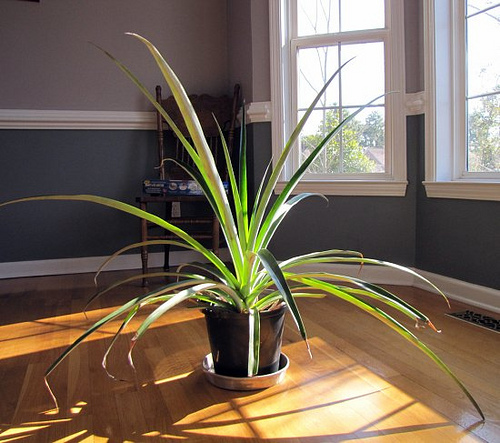
This? And that this will eventually produce…
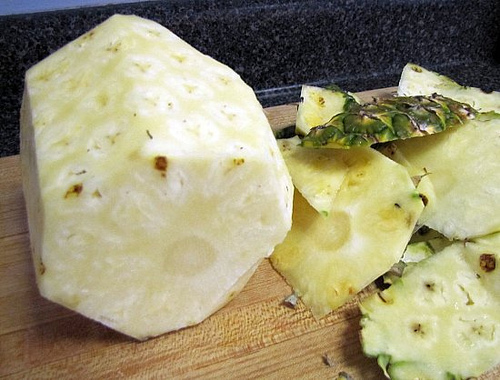
This?
Yes, I’m talking about turning your average, ordinary grocery store pineapple into a tropical showpiece within your home. A plant that is not only impressive but will WOW! you with a succulent pineapple in 24 months. It is extremely simple and well, awesome in my opinion. Since my local grocery store had their pineapples BOGO this week, I thought that I would show you all how to grow your very own tropical fruit.
Planting a Pineapple


1. Cut the top off of the pineapple, leaving about an inch of flesh below the greenery.

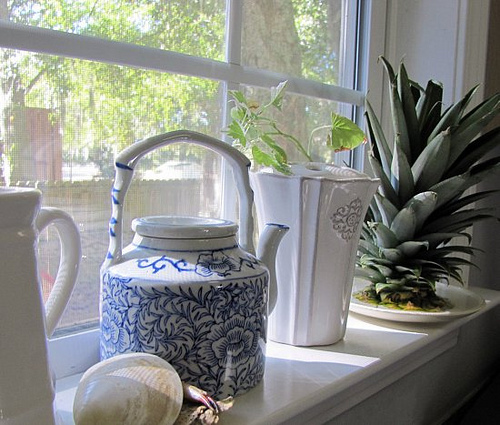
2. Place the top in a dish of water, with the water only half way up the flesh, for three days in a well lit window.
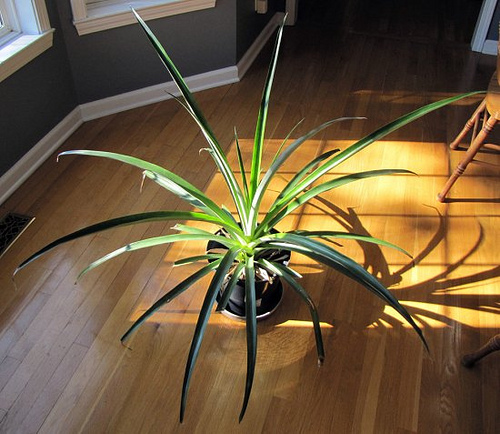
3. Plant the top in a large pot with some really good potting soil. If you do not see any root sprouts when you go to plant the top don’t worry, it will still take root. That’s it, you’re done. You have planted a pineapple.
In 24 months (sounds better than two years) it will look like this. Once your pineapple has been planted please make sure that you do not over water it. This tropical plant likes to be watered about twice a week straight down the middle. The dirt should be damp or moist…not saturated and fertilize well. This is an indoor plant, so if you do put it outside during the summer, be sure to keep a weathered eye on it. Now if you live in a tropical area unlike myself, the directions will probably change for indooor outdoor care. This is also a wide plant, make sure you have the room for it before you commit.


You will have an actual, large, utterly delicious pineapple in 24-36 months. Neat isn’t it! We were so excited about ours, that we picked it and devoured every little morsel before I could get any more photos.
The thought of growing my own pineapple always makes me smile and giggle just a little bit. Not because I love to grow my own food but because this is tropical fruit. It’s the next best thing to living on a island surrounded by white beaches, turquoise waters and eating slices of fresh pineapple in the shade of a palm tree.
Now what am I supposed to do with all of this leftover pineapple? Any ideas?
I see something sweet coming soon.
While you’re waiting for me to make something yummy with the leftovers, go ahead and plant a pineapple. As for all of you terrified brown thumbs out there don’t be scared, this might be just the plant for you. You can forget this guy for a week and be perfectly fine. All you need is a window with good light, good dirt and very little water…how could you go wrong.
Be adventurous plant a pineapple. If you do keep me posted, I would love to hear how it’s going for you.
Hugs,
Tickled Red
*Please bear in mind that I am not a hortoculturist. All of the directions that I recieved were like any other here in the south, passed down from neighbor to neighbor*
100 Healthy Remedies That Are Right In Your Home
With healthcare a pressing issue, prices going up, and cures in short supply, more and more people are turning away from their medicine cabinets and to their pantries and gardens for remedies. And they are experiencing a certain amount of success.
Whether looking to help a stuffy nose or something more serious, the answer can be as close as an arm’s reach away with a look at these 100 healthy remedies that are right in your home.
Common Healthy Remedies That Are Right In Your Home
The below are commonly found in the average home and can help in many ways.
- 1. Water : Because dehydration can cause a range of symptoms from fatigue to headache, a simple glass of water can sometimes work wonders. Other problems that can arise from lack of water include increased heart rate, dark urine, muscle cramps, and nausea. To avoid these, make sure you get your eight to ten glasses a day.2. Club Soda : Not only useful for getting out stains, it can also help with an upset stomach or dehydration. Because it is free of the sugar and additives of regular sodas, you can get the benefits without the negatives.
3. Chocolate Milk : Often thought of as more of an indulgence than healthy remedy, there are actually benefits to your childhood favorite. When drank after a rough workout, chocolate milk can actually be very useful as a recovery drink. Check out this video from The Doctors to learn more.
4. Honey : From healing wounds to fighting infections, honey is said to be one of the most ancient and turned to remedies across the world. It is even used to combat diarrhea, indigestion, stomach ulcers and gastroenteritis. Visit here to get more information.
5. Apple Cider Vinegar : From Hippocrates to modern day doctors, apple cider vinegar has been used to treat many ailments. They include aches, pains, lack of energy, warts, and are even used on animals.
6. Lemon Water : That yellow wedge on the end of your glass can be so much more than a garnish. Combining lemon with water helps alkalize both your blood and body, keeping it from becoming too acidic.
7. Cinnamon : Studies have shown that a half of a teaspoon of cinnamon per day can lower LDL cholesterol. Cinnamon can also help with diabetes, arthritis, and even leukemia.
8. Ginger : Used as a healthy remedy for centuries, the ginger in your home can actually help with many modern ailments. They include ovarian cancer, motion sickness, heartburn, and more.
9. Garlic : This clove has been used on everything from preventing the flu to the Bubonic plague. Raw garlic has also been used on a range of ailments including both acne treatment and managing cholesterol.
10. Hydrogen Peroxide : The subject of much controversy, this substance can help with everything from allergies to gingivitis. Check out this article by a doctor for more information.
Healthy Remedies To Help You Lose Weight
Avoid the dangers of supplemental weight loss pills by giving the below homemade remedies a try.
- 11. Milk : Studies showed that those who drank a glass of fat free milk before lunch experienced decreased appetite and calorie intake compared to those who drank fruit juice. Visit here to learn more.12. Almonds : One of the healthiest of all the nuts, research has been found that people with a diet rich in almonds lost more pounds than those without. They also helped with blood pressure. Visit WebMD for the entire article.
13. Vinegar : Some studies suggest that vinegar can increase metabolism. This in turn helps the body process food and burn more calories.
14. Jalapenos : Similar to the above, the spice found here can also increase metabolism. In fact, many naturally spicy foods tout similar properties.
15. Evening Primrose Oil : The oil is extracted from a plant of the same name and contains an essential fatty acid that can help with metabolism. Other benefits include combating cholesterol, fatigue, improper hormone levels, and more.
16. Make It Raw : Because cooking food can remove nutrients while leaving fat, some people choose a raw diet. This site is maintained by raw food chef and published author and contains more information.
17. Coconut : The oil found in coconuts is said to have weight losing properties. Try taking a tablespoon or two before meals to see if it works for you.
18. Pine Nuts : Use these nuts as a garnish to many dishes to help naturally decrease your appetite. The pinolenic acid found in them is what makes it work.
19. Flaxseeds : Similar to the above, they also help suppress appetite. The seeds also contain omega-3 fats and fiber as well.
20. Other Herbal Remedies : Thinking about taking an herbal remedy such as Ephedra or St. John’s Wort? Then visit here to get an expert medical opinion on many weight loss herbs.
Healthy Remedies For Beauty
Look good on the outside as well with these homemade remedies for beauty.
- 21. Aloe : Most commonly used for sunburn, it can also be used to treat wounds and other types of skin inflammation. There are even studies suggesting that aloe can help with constipation.22. Cocoa Butter : Extracted from cocoa beans, the white, waxy material can be applied to dry skin for a natural remedy. It can also be purchased at a store in stick or cream form.
23. Avocado : Often used as a main ingredient in face masks, the oils in avocados contain high levels of Vitamin E that are essential for healthy skin. Simply grab one, puree it, spread on your face, and leave for 20 to 30 minutes.
24. Toothpaste : Not just for a healthy smile, it can also be used as a spot treatment for acne. As soon as you feel a growth coming, apply toothpaste to the effected spot. If you feel it tingling, that means its working. Do not use as an overnight treatment.
25. Eggs : The protein found in eggs can be used to restore the strength of your hair. Simply mix one egg and one or two oils rich in moisturizing fats like coconut or sesame, apply to the hair, and wrap.
26. Ashes : Got a wart? Then grab some cool ashes from the fireplace to treat it naturally.
27. Banana Peel : Wrap one of these around a wart to help dissolve it. However, the time it takes to work – weeks to months – can have even the reasonably patient driving to the pharmacy.
28. Castor Oil : Use this on both your skin and hair for optimal results. The oil can also help with constipation, menstrual disorders, and more.
29. Mayonnaise : Coating your hair in this spread once a week can help restore its shine and manageability. Be sure to use the real kind, made of egg and oil.
30. Oatmeal : Not just a healthy breakfast, the beta glucan in real oatmeal can help your skin. Use a washcloth wrapped with oatmeal and rung into a sink to splash on your face for amazing results.
Healthy Fruit Remedies That Are Right In Your Home
That wicker basket in your home can contain a healthy remedy, along with a tasty snack.
- 31. Pomegranate : This super fruit can help with everything from anti-aging to fighting cancer. Simply choose a product that has pomegranate as one of the top three ingredients. This video from WebMD has more.32. Acai Berry : Long before Oprah was touting its benefits, Acai berries were well known for their antioxidant content. These can help with free radicals, disease, and are often found in juice or granola.
33. Watermelon : Containing high levels of glutathione, the pulp in water melon is another powerful antioxidant. Because it is made up of so much water, it can also help with dehydration.
34. Grapefruit : The amount of Vitamin C alone found in this fruit is reason to eat it. However, it also contains flavonoids and other nutrients. But this fruit can also be bad for you if drenched in sweeteners.
35. Cherries : If you have arthritis or any kind of joint problem, cherries are sweeter than you think. The Arthritis Foundation recommends drinking tart cherry juice mixed with water three times a day for its anti-inflammatory properties.
36. Orange : Not just a high boaster of Vitamin C, oranges also have other uses. In fact, the peel of an orange can be rubbed against rough or dead skin as a healthy remedy.
37. Apples : It’s true that this fruit actually does keep the doctor away. Conditions it can help include prevention of cancer and Alzheimer’s, along with diabetes and cholesterol management.
38. Berries : Both raspberries and blueberries contain high levels of antioxidants and other nutrients that can help a number of conditions. Those with allergies should definitely give a daily dose of this fruit a try.
39. Tangerines : If you want to slow the growth of cancer cells, take a look at this home healthy remedy. Like many other brightly colored fruits, they contain the cancer fighting substance flavonoids.
40. Papaya : This fruit’s high levels of Vitamin C, E, and others help it combat a number of ailments. Anyone looking to combat a cold or cancer should reach for this.
Healthy Remedies For Your Immune System
With cold and flu season in full swing, these items found in your home can help boost your immune system.
- 41. Elderberry : Used to treat a Panamanian flu epidemic in 1995, its antioxidants are a powerful force. Available as a juice or supplement, it can also help with cholesterol, vision, and heart health.42. Mushrooms : Not necessarily the ones in the backyard, but the right mushrooms contain both antioxidants and selenium to boost your immune system. The best kind are button.
43. Cabbage : Containing both antioxidants and glutathione, both help the immune system function. Don’t know which to get? Traditional, white, red, and even Chinese are all good sources of the preceding.
44. Wheat Germ : It contains both zinc and antioxidants to help fight infection, in addition to Vitamin B. Hate the taste? Then switch out part of the flour in a recipe to sneak in a little wheat germ.
45. Yogurt : The cultures found in it can both fight disease and keep them from happening. The best kind to get are those with no added sugar, low fat, and loaded with Vitamin D.
46. Spinach : Good for more than sailing cartoon characters, the folate in spinach helps cell production. It also contains fiber and Vitamin C for extra help.
47. Broccoli : Much like the above, even if you don’t like the taste of this vegetable, you’ll enjoy it more than having a compromised immune system. Full of Vitamins A, C, and D, it can help with a variety of ailments, including infection.
48. Sweet Potato : Switch out your baked or mashed potatoes for one of these to take advantage of the immune helping beta-carotene. They are also lower in carbs and contain high levels of Vitamin A for eye health.
49. Salt Water : Got a stuffy nose? Then help your immune system out by flushing your nose with salt water and removing virus particles. WebMD recommends mixing one quarter teaspoon salt, one quarter teaspoon baking soda, and eight ounces of warm water. Simply flush a few times with a bulb syringe to get results.
50. Eucalyptus : Often found in products like Vaporub, this plant can help clear congested sinuses and relieve pain. You can also use menthol or camphor as a substitute.
Healthy Remedies That Are Right In Your Spice Rack
These spices help make your food tasty, along with your body healthier.
- 51. Epsom Salt : Have you ever seen those foot detoxifier ads on television? Then save your money and instead soak your feet in warm water and Epsom salt to get the same effect. It can also help in a full bath and is even useful for treating sciatica.52. Tumeric : Part of the ginger family, it can be used for a variety of home remedies. Ailments treated include allergies, obesity, Alzheimer’s, in certain cancers, and more.
53. Sea Salt : Have trouble falling asleep? Pour a little of this into a glass of drinking water and it just may help you fall asleep and stay that way.
54. Horseradish : Anyone with a case of congestion knows that a dose of horseradish can instantly help. However, you can also apply it to acne and melasma for a natural remedy.
55. Pepper : Not only does black pepper help your food taste better, it also has other benefits. The stimulation of hydrochloric acid it stimulates can help improve digestion and reduce gas.
56. Oregano : Did you know that one teaspoon of this spice has as much antioxidants as three cups of broccoli? Simply add a little to pizza, pastas, sandwiches, and more to experience its benefits.
57. Dried Red Peppers : These can include cayenne, paprika, and others. The spices help stimulate digestion and burn fat.
58. Rosemary : This small green spice has been shown to help in heart health. It also helps reduce inflammation that can trigger many diseases.
59. Thyme : Similar to oregano, this spice is also high in antioxidants. Studies are also looking into its benefits against respiratory functions.
60. Curry : Have heart problems? Then you might have the remedy in your home’s spice rack. Made from turmeric, it contains many of the same benefits, along with help against heart disease.
Healthy Cancer Remedies That Are Right In Your Home
Although there is no cure for cancer, use the below to both fight and prevent it without ever leaving your home.
- 61. Legumes : Use this hearty vegetable as a meat substance to get the protein benefits without the price. You can also use beans, lentils, and the like as well.62. Soy : This substitute also has the same benefits as the above. Varieties such as tofu and miso also contain cancer combating nutrients called phytochemicals.
63. Tomatoes : Because they contain high levels of lycopene, they can reduce risk of cancer. Try a tomato paste or sauce to get the most amounts.
64. Fish : Healthy varieties such as wild salmon, tuna, and halibut contain many cancer fighting substances such as oil. They also contain cancer fighting selenium that can be dangerous as a supplement but useful in fish.
65. Orange Juice : Containing high levels of folate and Vitamin C, it can help combat cancer. Be sure and get a healthy variety that isn’t overloaded with sugar.
66. Curcumin : This spice is also part of the turmeric family. Sprinkle a little into your next dish to enjoy it’s cancer fighting and anti inflammatory aspects.
67. Walnuts : The antioxidants and oils in these nuts can help prevent or stave off cancer. You can also substitute pistachio, pecan, and other nuts for similar benefits.
68. Cauliflower : Along with broccoli, this vegetable helps create sulforaphane in the body to protect healthy cells from cancerous ones. It is also recommended to grow it in your own home.
69. Sunshine : Get your dose of Vitamin D right from your home with this simple remedy. Simply expose at least 40% of your body to ten minutes of natural sunlight to get it.
70. Tea : Containing nutrients called kaempferol, a cup or four of tea a day can help combat cancer. To find out which kind are the best, see the below.
Healthy Tea Remedies That Are Right In Your Home
Switch out your coffee for one or all of the below to instantly get a healthy remedy.
- 71. Green Tea : For its high content of both antioxidants and polyphenols, green tea gets the top spot. It can help fight cancer, stimulate metabolism, boost your immune system, and much more.72. Tea Bags : You don’t just have to drink it to enjoy the benefits. Putting warm tea bags over your eyes can help reduce and alleviate pink eye.
73. White Tea : A cousin of green tea, it helps fight viruses and bacteria. Read this article for more information on a study done at Touro College.
74. Black Tea : If looking to combat heart disease and stroke, check your home for black tea. It even contains fluoride to aid in dental health.
75. Oolong : Burn calories, increase blood flow, and build stronger bones with the help of this tea. It can also help with an upset stomach.
76. Chai Tea : This tea also contains antioxidants and can help in digestion. It can even be found at your local Starbucks as a hot or cold beverage.
77. Vanilla Tea : This tea is an excellent choice for diabetics. Not only will it satisfy your sweet tooth, but it can help control blood sugar levels.
78. Red Tea : Most popular in Africa, this tea contains flavonoids that are useful against many ailments. It also helps with the nervous system, kidney stones, and can even be used as a sedative.
79. Chamomile : If you suffer from nervous disorders such as insomnia, panic attacks, and twitches, give this tea a try. It also helps with menstrual cramps and ulcers.
80. Tibicos : Think you can’t get tea from a mushroom? Then try this ancient and little known tea to cure endless ailments and has been used by the likes of Mother Theresa.
Healthy Remedies For Unusual Problems
Right in your home may be the answer to that embarrassing or unusual health problem.
- 81. Bananas : Got a hangover? Grab a banana. Better than a cup of black coffee, bananas contain potassium, which was depleted during that long night of drinking. They can also help with upset stomach and nausea.82. Peanut Butter : Try eating some of this before drinking to stave off the hangover. This practice is most commonly found in Africa.
83. Tomato Juice : The last of the hangover remedies, there’s a reason why the Bloody Mary is the hair-of-the-dog drink of choice. The tomato juice contained in it actually helps your body speed up the process of alcohol. And, of course, it works best when there is no vodka in it.
84. Lemon Juice : If you have diarrhea and can’t leave the house to purchase an over the counter remedy, try reaching for those lemons. The juice in them can kill of the pathogens that cause it. Drinking the juice of one lemon three to five times a day should do it.
85. Powdered Milk : This substance carries the antibodies of the E. coli bacteria that can cause diarrhea and a host of other health problems. Some health food stores carry special kinds just for this kind of problem.
86. Gingkgo Biloba : Used as an herbal remedy for cardiac patients, it can also help with erectile dysfunction. The herb can improve blood flow to the arteries in the effected area.
87. Ginseng : This Asian herb is also used to treat the above. Be sure not to mix the two.
88. Licorice : Because women have embarrassing problems too, use the above to help treat yeast infections. Pouring teaspoon of licorice powder into a pint of boiling water can make a homemade douche.
89. Cranberry Juice : Also used to treat the above, the juice can even help with urinary tract infections. Be sure to get an unsweetened, 100% juice kind.
90. 24 More : For more on this health problem, click here to get a list of ways to treat and prevent if from How Stuff Works.
Lesser Known Healthy Remedies That Are Right In Your Home
When you think of the below, home healthy remedy doesn’t come to mind but should.
- 91. Bacteria : You read that correctly. Friendly bacteria in your intestines can actually help keep the more dangerous variety out. A variety of probiotics purchased over the counter can help. Check out this video from a licensed nutritionist for more.92. Oysters : Because raw oysters are often seen to cause more problems than they solve, the benefits usually go unnoticed. However, the zinc found in oysters can help stave of the flu, heal wounds, and yes, increase male fertility.
93. Wine : The polyphenols found in wine actually can act as an antibacterial agent. They can help with everything from flu to diarrhea. Drinking more than one glass of red or white wine, however, can do more harm than good.
94. Ice : If you have a black eye, putting a steak on it can actually make it worse. The raw meat can contain high levels of bacteria and cause an infection. A plain old ice pack will have to do.
95. Black Strap Molasses : This lesser known healthy remedy contains tons of nutrients including iron, calcium, and copper. It is said to help with everything from arthritis to going prematurely gray.
96. Beer : Another correct read, studies have shown that one to two glasses of beer a day can reduce the risk of stroke and other heart disease. The type and brand you drink doesn’t matter, and you can visit AskMen for more.
97. Tequila : Can a shot of tequila be good for you? According to Associated Content it can. A moderate amount can help with cholesterol, metabolism, and even stress. As with all alcohol, addiction can also develop.
98. Cayenne Pepper : You don’t have to be from Cajun country to enjoy the healthy remedy of cayenne pepper. Simply mix with water and drink to cure a sore throat. Repeat as necessary.
99. Vodka : Vodka can make a very healthy remedy straight from your home without ever having to drink it. Use it topically to cure toothaches, neutralize jellyfish stings, and even combat swimmer’s ear. Visit here to learn more.
100. Tobacco : Use this for more than a nicotine fix the next time you have a bee sting. Simply pinch off the end of a cigarette, wet, and place it on the sting to relieve it.
These 100 healthy remedies that are right in your home should not be interpreted as specific medical advice. Consult with a qualified healthcare provider before making decisions about remedies or health conditions.
If you enjoyed this article, please bookmark it at del.icio.us »

This entry was posted on Monday, February 1st, 2010 at 10:21 pm and is filed under Blog. You can follow any responses to this entry through the RSS 2.0 feed. You can leave a response, or trackback from your own site.
Featured Degrees
- AA in General Studies from Liberty University
- AA in Healthcare Administration from American InterContinental University
- AA in Healthcare Reimbursement from Virginia College Online
- Administrative Health Care Management from San Joaquin Valley College
- AS in Health Administrative Services from Colorado Technical University
Latest from the blog
- 80 Incredibly Healthy & Healing Herbs You Can (Legally) Grow at Home
- 50 Best Twitter Feeds for Pharma News
- 10 Ancient Remedies That Are Still Around Today
- 50 Fascinating Brain Science Blogs
- 10 Seriously Disturbing Facts About Soda
Blog Archive
- July 2010
- May 2010
- April 2010
- March 2010
- February 2010
- January 2010
- December 2009
- November 2009
- October 2009
- September 2009
- August 2009
Degree Finder
Subscribe to:
Posts (Atom)
~Kristin